
Query Fan Outs: How ChatGPT searches the web
We tracked ChatGPT’s fan-out searches for “chess, yoga, cycling near Ledru-Rollin” and used them as a blueprint to adapt the AEO strategy of Hotel Ranque.

When you ask ChatGPT a travel question, it rarely does “one search”.
It decomposes your prompt into multiple web searches (called fan out queries). Think of it as an AI turning one messy sentence into a shopping list of mini-intents.
We tracked those fanouts for this query:
“find me hotels for chess yoga cycling in paris near ledru rollin”
Over time, the fanouts came in a bit differently. And those told us exactly what the model was trying to confirm on the open web… and what our site was missing.
1) What “fan Outs” look like in practice
Instead of searching “hotels chess yoga cycling ledru rollin”, ChatGPT fanned out into repeated, narrower searches like:
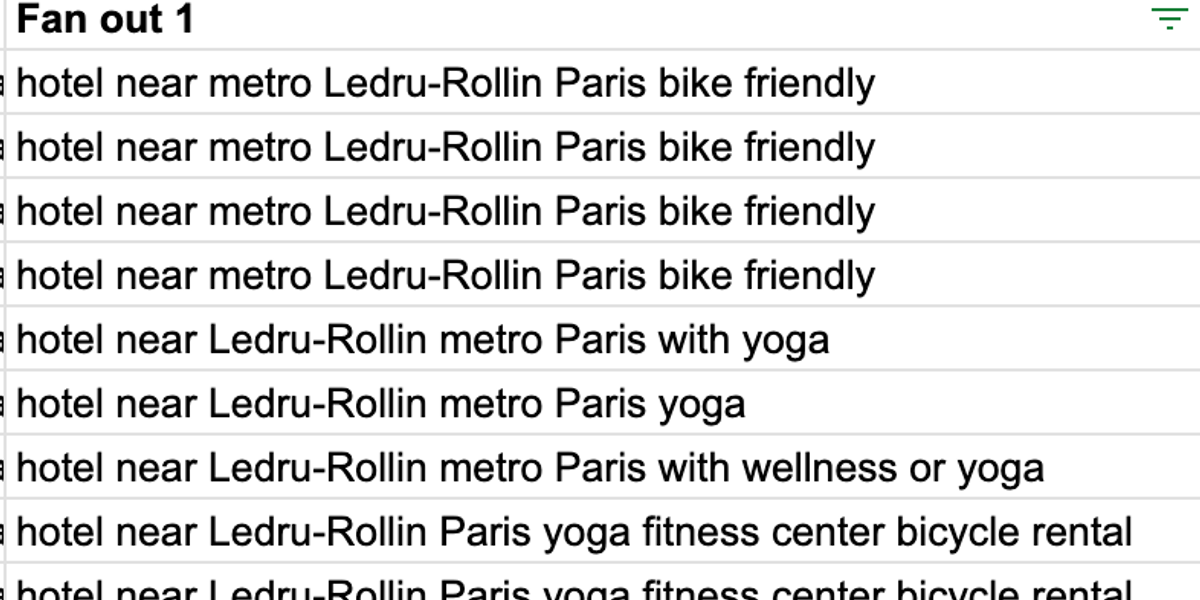
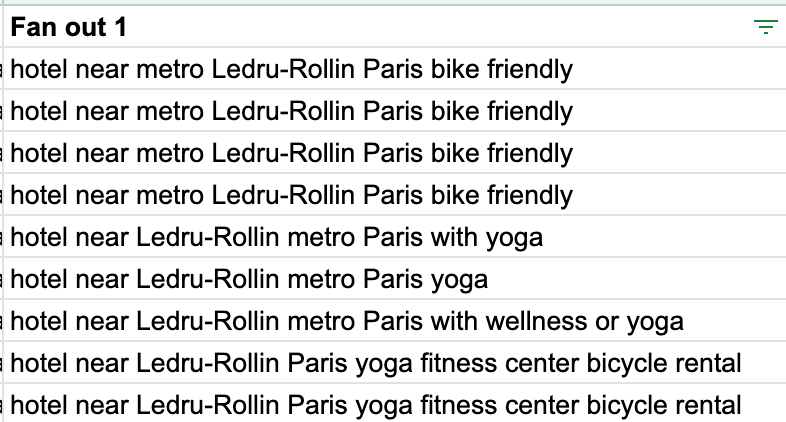
- “hotel near metro Ledru-Rollin Paris bike friendly” (repeated a lot)
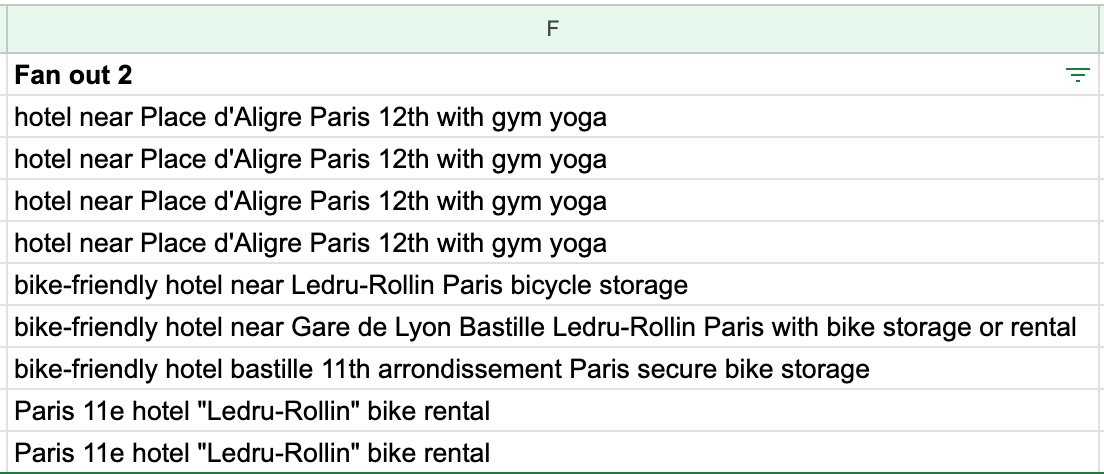
- “hotel near Place d’Aligre Paris 12th with gym yoga” (repeated a lot)
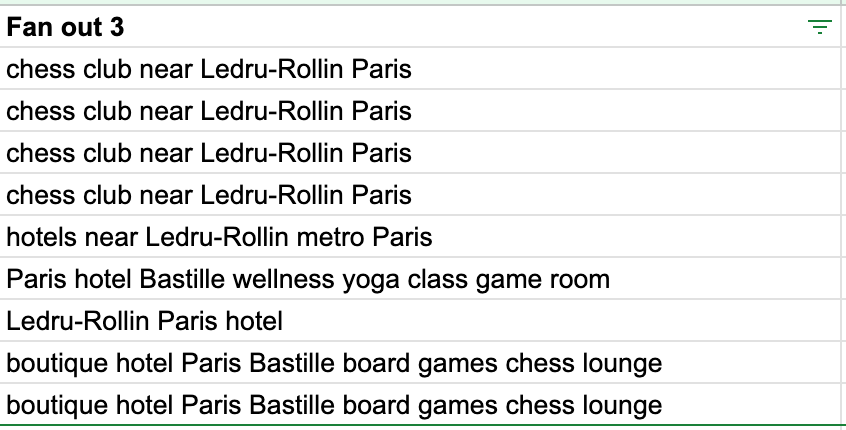
- “chess club near Ledru-Rollin Paris” (repeated a lot)
- “bike-friendly hotel … secure bicycle storage … rental”
- “boutique hotel Paris Bastille board games chess lounge”
- "Paris 11e hotel "Ledru-Rollin" bike rental"
- "Paris 11e 12e hotels Bastille Ledru Rollin wellness yoga"
- "Paris yoga studio near Ledru Rollin Bastille"
- And then some searches on Hotel Names directly
This repetition is the tell: the model is “pinning” the core intent pillars and trying to validate them with multiple sources.

2) The model’s intent blueprint revealed
The model treats fan outs in order: first search, second search, etc.
Fan Outs 1: “Bike-friendly” becomes the primary filter
Top searches were basically:
Ledru-Rollin + hotel + bike-friendly
This suggests the model treats cycling as a strong differentiator, not a nice-to-have. Interesting isn't it?
Fan Outs 2: “Micro-location” + “amenities” gets more precise
Suddenly we see:
- Place d’Aligre
- Gare de Lyon / Bastille / Ledru-Rollin
- bike storage / rental
- gym yoga, but also wellness
- 11th
- 12th
- oh wait, 11th AND 12th
But also a critical issue: 11th vs 12th arrondissement confusion appears in the searches. Which makes sense because the address is at the junction between the two districts.
That matters because it fractures retrieval:
- the model searches in the wrong arrondissement,
- finds the wrong competitors,
- and your site becomes “less matching” by geography.
Fan Outs 3: The model splits into “Chess” as its own universe
Now the top fanouts become:
- “chess club near Ledru-Rollin Paris”
- “board games chess lounge”
- plus broader “hotels near Ledru-Rollin”
Meaning: the model is building a second shortlist based on chess identity, not just hotel basics.
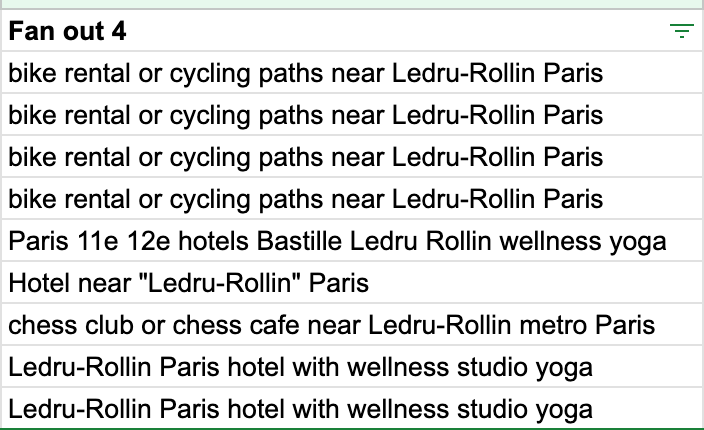
Fan Outs 4: It expands beyond hotels into “experience around the hotel”
Fanouts include:
- bike rental or cycling paths near Ledru-Rollin
- chess club or chess cafe near Ledru-Rollin metro
- wellness studio yoga
This is important: the model isn’t only verifying “does the hotel have X”.
It’s verifying “can this neighborhood support the lifestyle”.
It also correlates yoga with wellness.
3) The fix: we changed the site to match the model’s retrieval language
We made a set of targeted edits. Not “SEO for Google”. More like: make the site speak the same nouns as the Fan Outs.
A) Fixed the arrondissement error (11th → 12th)
Address 87 Avenue Ledru-Rollin, 75012 is in the 12th arrondissement.
But at the junction between both. So we spoke about both.
We fixed it across:
- schema
- llms.txt
- neighbourhood page
- content JSON
- about, rooms, for-who
- experience pages
This is the kind of “tiny truth” that prevents the model from building a wrong shortlist.
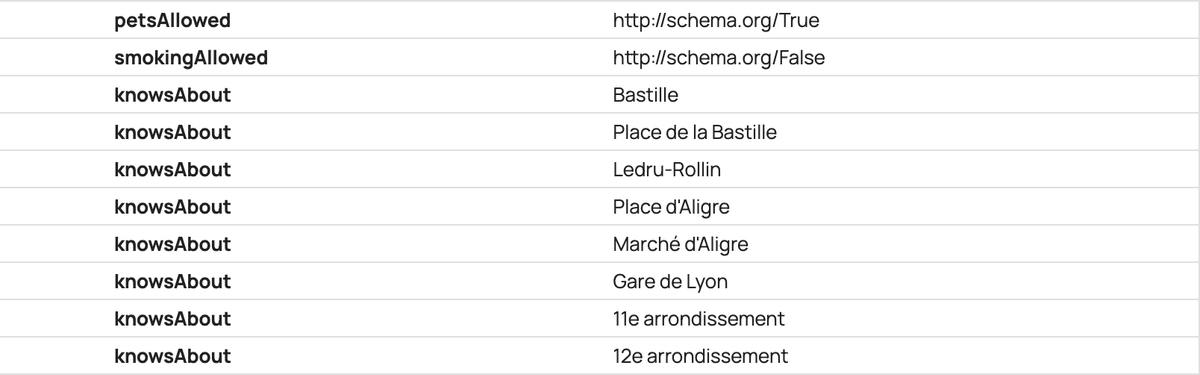
B) Upgraded Schema.org to reflect the Fan Outs
We added structured signals for:
- Bike-friendly hotel
- Secure bike storage
- Bicycle rental assistance
- Chess club / bar / game room
- Wellness studio with yoga
- Fitness center with yoga studio
And enriched knowsAbout with terms like:
“Place d’Aligre”, “12th arrondissement”, “chess café”, “board games”, “bike-friendly”, “wellness”.
Schema won’t magically rank you.
But it reduces ambiguity when a model tries to compress your hotel into a few attributes.
C) We turned 3 experiences into “retrieval landing pages”
Cycling Lab page
- H1 explicitly matches the fanout vocabulary: “Bike-Friendly Hotel Paris: Cycling Lab, Secure Bike Storage & Bicycle Rental”
- Added FAQs: rental help, “what makes you bike-friendly”
Chess Bar page
- Title + keywords: chess club, chess café, board games, game room
Yoga Studio page
- Keywords: wellness, fitness center, Pilates, bodyweight fitness
This aligns with how fanouts were clustered: bike / chess / yoga as separate retrieval lanes.
4) Why duplicates matter (ranks 1–4 repeated)
In every fanout waves, the top slots are often identical queries repeated.
Interpretation: the model runs parallel searches to confirm the same claim from multiple sources.
So the repeated query is your “primary retrieval doorway”.
If you match that doorway (title, schema, FAQ, on-page copy), you increase your odds of being shortlisted.
5) What this means for hotel AEO (and why it’s measurable)
Fanouts give you something rare: a concrete list of phrases the AI uses to discover hotels.
And my prediction is that 2026 will see a lot of optimization there, for both SEO (since the Fan Outs are Google Search queries) and AEO.
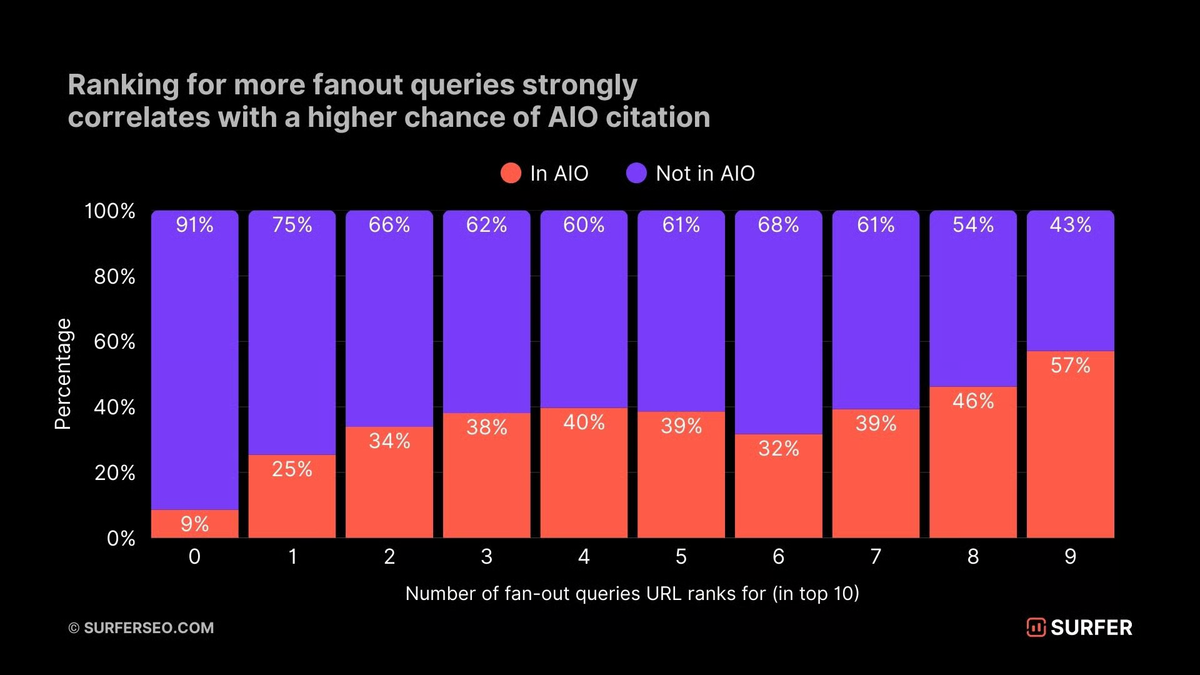
It has also been proven that ranking for Fan Outs increases chances of being cited (here)
That’s gold because you can:
- Cluster fanouts by theme (Bike / Yoga / Chess / Location)
- Create one page per cluster with:
- exact phrase coverage (H1/title/meta)
- FAQs that mirror the questions
- schema that encodes the same attributes
- Re-run the same user query weekly and track:
- Did fanouts shift?
- Did your hotel appear more often?
- Did the model cite your domain more?
6) The punchline
This experiment wasn’t about guessing what “AI likes”.
It was about listening to the model’s own research behavior.
Fanouts are the model’s thought process, but in search queries.
If you build pages that match the fanout language:
- you reduce misunderstandings (hello, 11e/12e)
- you increase retrieval confidence
- and you make it easier for the model to recommend you for specific lifestyles, not generic hotel shopping.
That’s the whole strategy for Hotel Ranque:
Don’t just rank for “hotel in Paris”.
Rank for the intent the AI is actually verifying.